Anne Cromwell
Wolf HallAnne Cromwell, daughter of Thomas Cromwell and Liz Wykys, emerges as a perceptive, self-possessed child whose brief appearances join ordinary childhood to sudden bereavement. She is tough enough to be imagined as a future Lord Mayor, quick with her studies, and still young enough to need her father’s assurance that she must go to bed beside her sleeping sister. Her story is small in the scale of court politics, but it gives those politics a domestic measure: while princes argue over inheritance, a child writes her own name and learns that her mother is gone.
Family and Character
Anne is one of the young daughters in the Cromwell household. Her father describes her as a tough little girl, so unlike the diminutive Mary Tudor that he jokes Anne could eat a princess for breakfast. In the family’s imagined future, Anne becomes Lord Mayor of London; the joke rests on her force of character and on her father’s affectionate recognition of her steady, formidable gaze.
That description is sharpened by the moment Thomas returns home to find the household in mourning. Anne’s face is like stone. She keeps Grace’s hand closed in her fist, holding fast to her younger sister while the adults bring the news of Liz’s death to their father. Anne’s composure does not mean she feels nothing: when Thomas carries Grace to bed and tells Anne to lie beside her in case she wakes cold, Anne answers that she herself may feel cold. The small correction makes her own need visible even as she is asked to help care for Grace.
Childhood and Learning
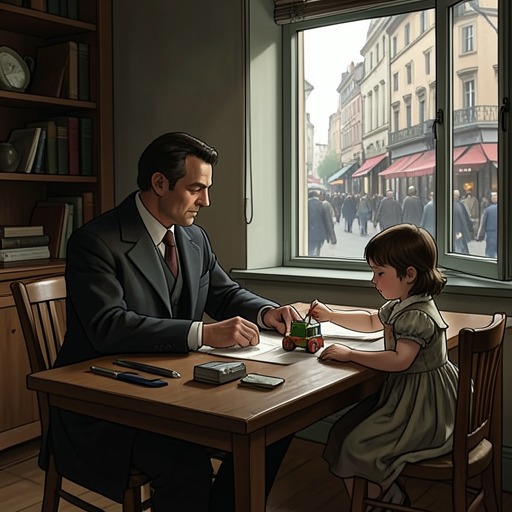
Anne’s early education appears in a quieter scene after the family’s loss. Sitting with Thomas as rain falls, she writes beginner’s Latin in her copybook. By St John’s Day, she has learned all the common verbs, and her father tells her she is quicker than her brother Gregory. When he asks to see the book, he discovers that she has written her name repeatedly: “Anne Cromwell, Anne Cromwell …” The repetition is a concrete sign of a child practicing both letters and identity, inscribing her name across the page.
The contrast with Gregory’s education is affectionate rather than punitive. Gregory, nearly thirteen and studying at Cambridge, has little interest in books but loves stories of dragons, green people in the woods, sea serpents, and ghosts. Thomas is glad that he is growing and does not demand that he become a scholar before he is ready. Anne, by contrast, is presented as quick with formal learning. These glimpses establish different temperaments within the family without making either child a problem to be corrected.
Liz’s Death and Anne’s Grief
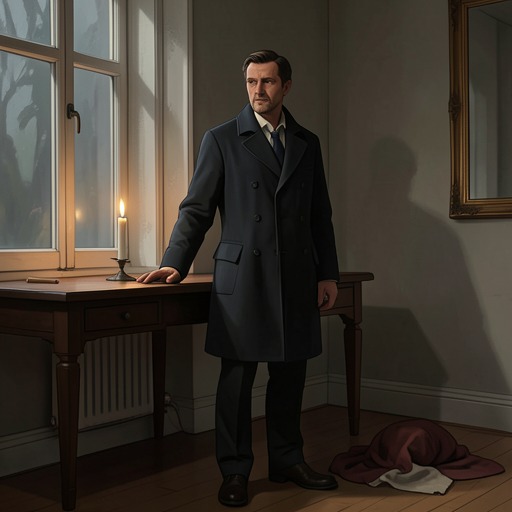
The household’s crisis begins while Thomas is away. He comes home at dusk to find torches burning and faces turning from him; at first, he fears that Gregory has died, before realizing that Liz is absent. The girls have been put into their nightdresses, their bare feet and nightcaps making the room look almost ordinary despite the shock. Anne stands with Grace’s hand in hers, and Thomas lifts the younger child into his arms. Grace falls asleep against his shoulder, while Anne remains awake and watches.
Thomas tells Anne that Grace must be taken to bed because she is little and might wake cold. Anne replies that she might feel cold too. The answer briefly interrupts the adults’ practical effort to manage the night: Anne is not only the capable older sister, but also a child whose own fear and vulnerability require recognition. Thomas sends Mercy ahead with him, puts Grace down without waking her, and stays with Anne until her silent crying stops and her hand loosens in his. He will not leave the girls to be comforted by someone else; in this moment, his attention to Anne is part of the immediate work of grief.
Liz’s death is recounted through Mercy’s account of the day. Liz had become dizzy, shivered while her skin burned, and declined rapidly; she asked for a priest, confessed, and died by four in the afternoon. In the bedroom, herbs burn against contagion, candles stand at Liz’s head and feet, and linen binds her jaw. Anne’s grief therefore unfolds within the physical arrangements of death and fear of infection. The family later gathers to pray for Liz, with parish poor men given black coats and the men of the household pledging seven years of Masses for her soul.
Narrative Significance
Anne is not given an independent political or adult storyline; her significance lies in what her scenes reveal about the Cromwell household and Thomas’s private life. The imagined future of a girl who might become Lord Mayor sits beside a father’s memory of his own violent youth and his refusal to judge his children solely by conventional measures of achievement. Anne’s quick Latin and repeated signature offer one image of what she may become; her clenched hand around Grace’s, and her answer about feeling cold, show the child she is now.
Her presence also counters the scale of the novel’s public conflicts. Questions about the king’s marriage, the queen’s fertility, and the succession turn children into dynastic evidence; Anne’s scenes instead attend to childhood as a lived experience of learning, dependence, and loss. She is not Mary Tudor, whose legitimacy is a matter of state, nor a princess sent to hold court. She is a daughter in a household abruptly altered by death, whose father must learn the absence of his wife while remaining present to his children. The repeated act of writing “Anne Cromwell” thus carries quiet weight: a name practiced on a page, a family identity held amid change, and a child continuing to grow after grief has entered the house.